
From "correct documentation" to "correct physical product": This FCS2026 seminar thoroughly discusses the "last mile" of packaging compliance.
During the 2026 Food Contact Materials Safety Conference period, INNOPACKING will host a closed-door session focusing on four business issues: the audit baseline version, tag information verification, synchronization of regulatory changes, and closed-loop verification of physical assets.
From November 5 to 6, the 2026Food Contact Materials Safety Conference (FCS 2026) conference was held at the Pullman Haikou Xinghai Bay Hotel. Under the theme "Rising Step by Step, Trusting the Future Together," representatives from regulatory authorities, research institutions, international organizations, and industry enterprises gathered to conduct discussions centered on three key themes: regulatory compliance, technological innovation, and collaborative governance and mutual trust.
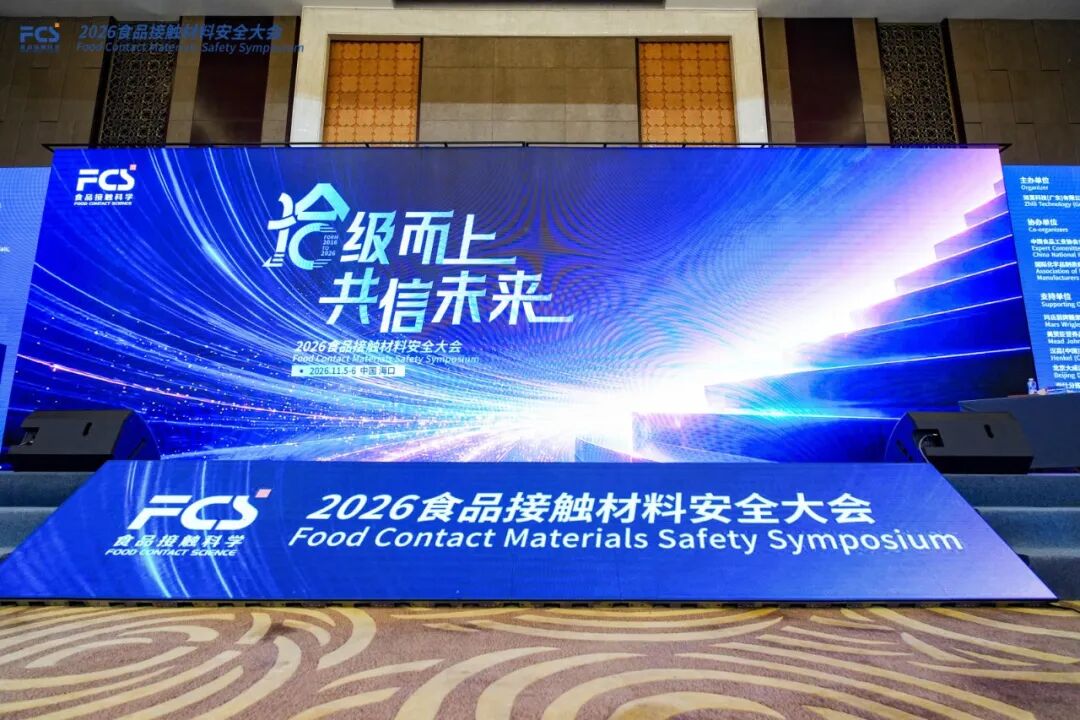
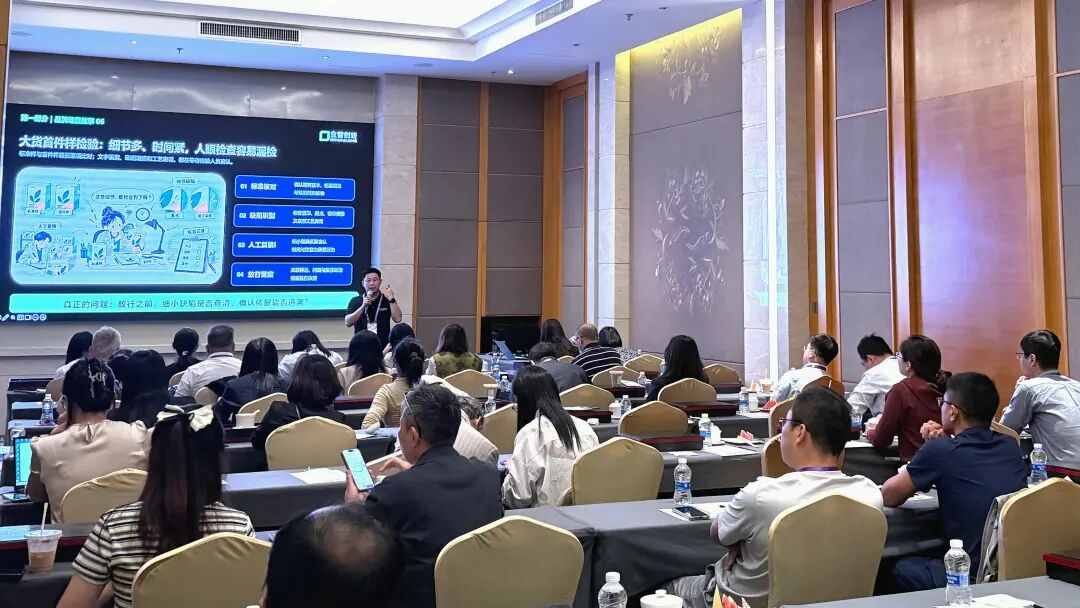
During the conference, INNOPACKING held an in-depth closed-door session focusing on the pain points surrounding the entire packaging process that matter most to attendees. Without relying on abstract concepts, the session broke down challenges based on real-world business scenarios and demonstrated practical implementation capabilities; it also featured discussions with brand representatives and packaging, regulatory, and procurement peers in attendance on how to navigate the "last mile" from regulatory compliance to shelf readiness.
Four real-world business challenges and four actionable solutions
The presentation focuses on the "last mile" and begins with four real business issues:
The Four Questions Posed in the Speech
- When multiple versions of the ingredient list are in parallel, how should the unique review baseline version be determined?
- Manually verify label information item by item: how to minimize omissions and reduce the risks associated with repackaging materials and corrective actions;
- How to synchronize the implementation of regulatory updates and manuscript changes across every SKU and each supplier;
- From design drafts to physical samples: how to establish a closed-loop verification process that ensures "document accuracy" translates into "physical product accuracy."
These four answers are underpinned by PACKFLY—the comprehensive capabilities of the Packaging Manuscript Full Lifecycle Management Platform: unified management, document-chain traceability, process compliance, intelligent comparison, textual proofreading, and risk pre-control. From "detecting errors" to "preventing errors," and from "people reviewing manuscripts" to "systems managing manuscripts," this statement can almost serve as the keynote theme of the entire presentation.
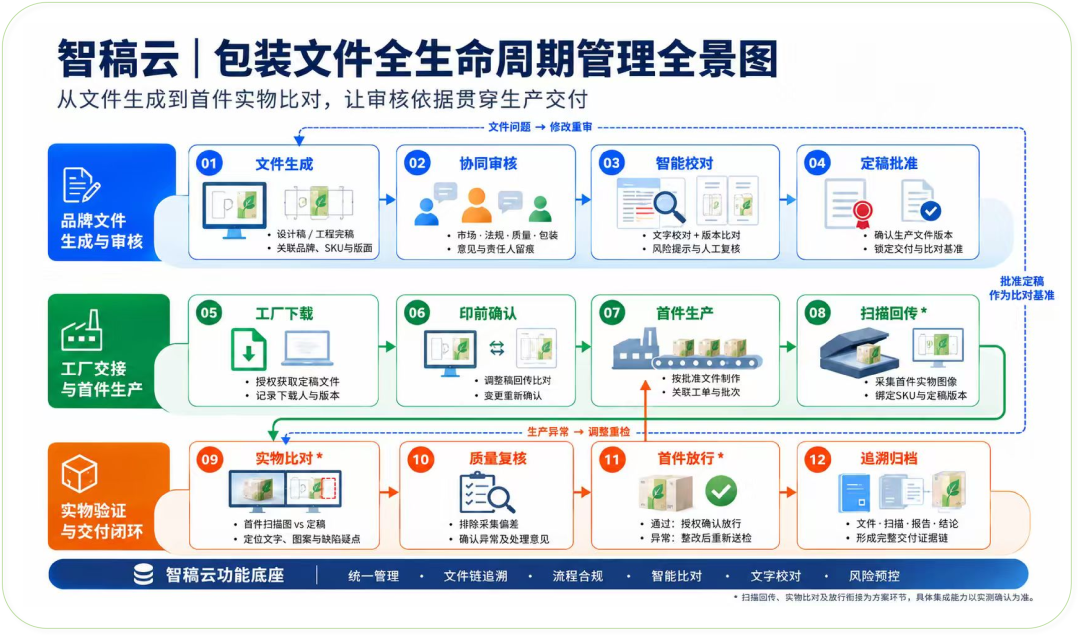
Why is it common for "managing manuscripts" to be ineffective?
Before presenting the method, the presentation first laid out a set of scenarios.
The fast-moving consumer goods industry operates much like a "Red Queen effect": scenarios are changing, channels are changing, and target audiences are changing; brands can only continuously launch new products and redesign their offerings. As more SKUs and versions are released simultaneously, the windows for review and proofing become increasingly tight. A single packaging redesign requires repeated back-and-forth coordination among marketing, R&D, regulatory affairs, packaging, procurement, design firms, and printing presses—information is scattered across different personnel and systems, revisions shuttle back and forth, confirmations are dispersed throughout messages and emails, and whether the delivered version is consistent still requires item-by-item verification.
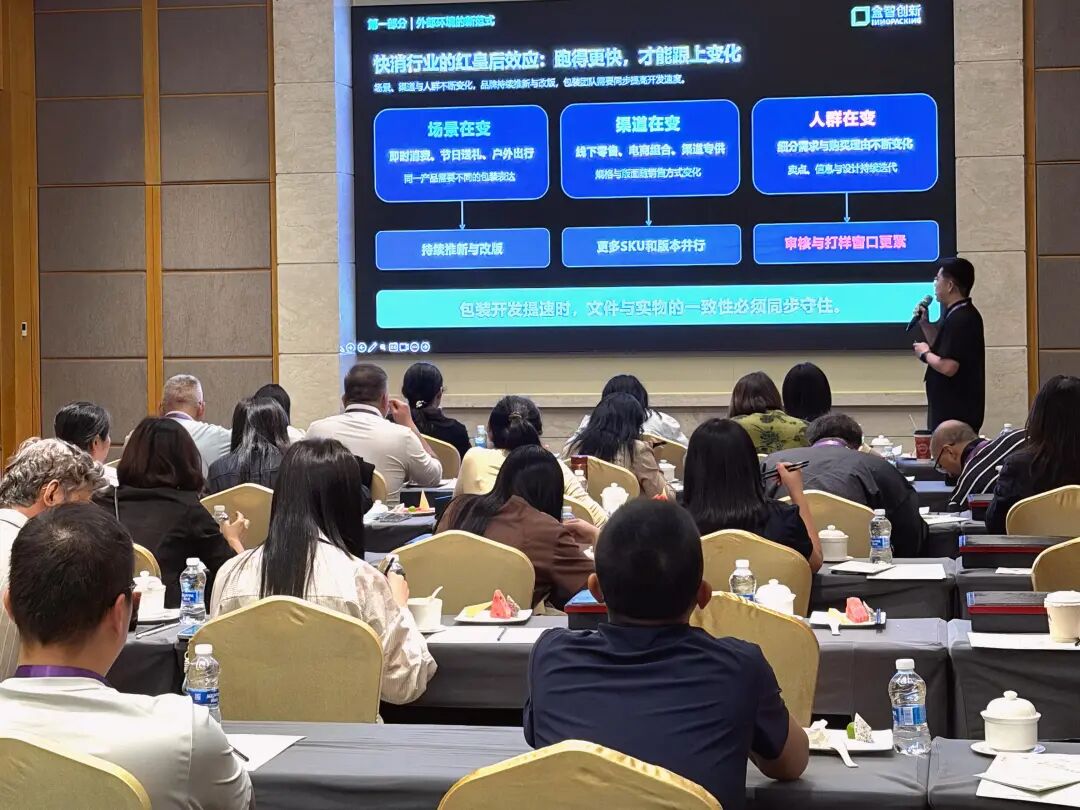
Risk lies precisely in these everyday activities: formulation tables, nutritional data, regulatory comments, design documents, and supplier submissions all come from different sources; copying, pasting, and paraphrasing are precisely the entry points through which errors enter the publication. The naming of versions also highlights the problem: when "Final Version. ai," "Final Version 2. ai," "Final Version – Legal Confirmation. ai," and "Final Version – Printing House Return Draft. ai" coexist simultaneously, the review process becomes fraught with uncertainty— "I don't know which version should actually be reviewed at this moment."
From Documents to Physical Products: Turning Consistency into Capability
AI In an era of intensifying competition, the efficiency gains achieved through a single feature will soon be replicated by others. If you add an additional review button today, your competitors will have it tomorrow. The real challenge lies in integrating insight, design, compliance, prepress, proofing, and mass production into a single workflow, enabling system data and physical samples to cross-validate each other.
The ultimate goal of packaging development is not merely the design and delivery of the packaging; it is ensuring that the correct packaging reaches the consumer safely and reliably.
In this sharing session, INNOPACKING provided the answer as two modules plus an ecosystem loop:
- PACKFLY manages documents, placing assets, reviews, versions, and processes in the same mid-office to answer "who made the decision, when, based on which document, and on what grounds."
- Mockup focuses on tangible assets, using authentic materials, craftsmanship, and color to bring the evaluation process forward.
What we have consistently provided is essentially a series of distinct stages within a single project: structural development, design refinement and finalization, rapid prototyping, functional testing, material customization, color reproduction for mass production, document consistency checks, and batch redesigns.
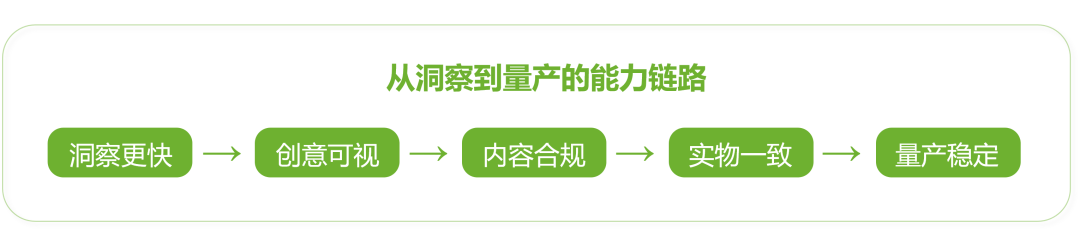
In this presentation, we would like to share three key points with our industry peers.
During the discussion following the conclusion of the sharing session, many brands noted that their most striking realization was that AI is not merely a distant concept in the field of packaging; it already possesses mature, practical implementation capabilities.
I would also like to share with you the three concluding points summarized at the end of this discussion:
Packaging compliance is not a "cost item"; it is the bottom line for a brand. The losses resulting from a compliance incident far exceed the costs you incur in process controls; do not wait until a problem has arisen before patching the gaps.
Efficiency gains do not come from employees working overtime; they come from using systems to replace repetitive labor. Designers and compliance professionals should devote their time to creativity and judgment rather than repeatedly proofreading, revising drafts, and transferring documents.
AI will not replace people; however, teams utilizing AI will inevitably replace teams that do not use AI: technology is not intended to lead to layoffs; rather, it liberates people from low-value repetitive tasks so they can engage in more valuable work.
ONE TOUCH × ONE PASS: one-click generation and one-pass approval—this was the original vision behind INNOPACKING and PACKFLY. We also hope to work with more brand partners in the food industry to transform packaging from a manual task that "relied on experience and manual oversight" into a standardized capability that "relied on systems and data," enabling every brand to avoid common pitfalls and create more high-quality products.
This article has been compiled and archived based on posts from the company's official WeChat account; the full text and accompanying images are published on this website.